Investigations
UN peacekeepers in Haiti implicated in child sex ring
‘I did not even have breasts,’ said one girl, telling investigators that from ages 12 to 15, she had sex with nearly 50 peacekeepers, including a ‘Commandant’ who gave her 75 cents
April 12, 2017 | Paisley Dodds
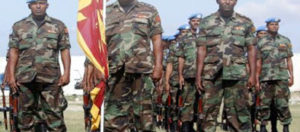 In the ruins of a tropical hideaway where jetsetters once sipped rum under the Caribbean sun, the abandoned children tried to make a life for themselves. They begged and scavenged for food, but they never could scrape together enough to beat back the hunger, until the UN peacekeepers moved in a few blocks away.
The men who came from a far-away place and spoke a strange language offered the Haitian children cookies and other snacks. Sometimes they gave them a few dollars. But the price was high: The Sri Lankan peacekeepers wanted sex from girls and boys as young as 12.
“I did not even have breasts,” said a girl, known as V01 — Victim Number One. She told UN investigators that over the next three years, from ages 12 to 15, she had sex with nearly 50 peacekeepers, including a “Commandant” who gave her 75 cents. Sometimes she slept in UN trucks on the base next to the decaying resort, whose once-glamorous buildings were being overtaken by jungle.
Justice for victims like V01 is rare. An Associated Press investigation of UN missions during the past 12 years found nearly 2,000 allegations of sexual abuse and exploitation by peacekeepers and other personnel around the world — signalling the crisis is much larger than previously known. More than 300 of the allegations involved children, the AP found, but only a fraction of the alleged perpetrators served jail time. Read More>>
U.S. says countries must punish United Nations troops for sexual abuse
April 13, 2017 | Edith M. Lederer and Paisley Dodds
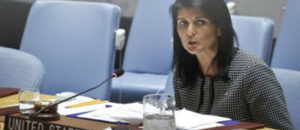 U.S. Ambassador Nikki Haley on Thursday urged all countries that provide troops for U.N. peacekeeping missions to hold soldiers accountable for sexual abuse and exploitation, an appeal that came after she cited an Associated Press investigation into a child sex ring in Haiti involving Sri Lankan peacekeepers.
She also warned that “countries that refuse to hold their soldiers accountable must recognize that this either stops or their troops will go home and their financial compensation will end.”
Former U.N. Secretary-General Ban Ki-moon recommended that U.N. peacekeepers accused of sexual abuse and exploitation be court martialed in the countries where the alleged incidents take place and said the U.N. would withhold payments to peacekeepers facing credible allegations.
Haley was speaking after the Security Council voted unanimously to end the U.N. peacekeeping mission in Haiti in mid-October, sending a strong signal that the international community believes the impoverished Caribbean nation is stabilizing after successful elections. Read More>>
UN peacekeepers in Congo hold record for rape, sex abuse
September 23, 2017 | Krista Larson and Paisley Dodds
 BUNIA, Congo (AP) — She had been orphaned by a brutal conflict, but the 14-year-old Congolese girl found refuge in a camp protected by United Nations peacekeepers.
The camp should have been safe the day she was raped. A delegation from the U.N. was paying a visit, and her grandmother had left her in charge of her siblings. That was the day, the girl says, that a Pakistani peacekeeper slipped inside their home and assaulted her in front of the other children.
But that was not the end of her story. Even though she reported the rape, the girl never got any help from the U.N. She did become pregnant, however, and had a baby.
If the U.N. sexual abuse crisis has an epicenter, it is the Congo, where the scope of the problem first emerged 13 years ago — and where promised reforms have most clearly fallen short. Of the 2,000 sexual abuse and exploitation complaints made against U.N. peacekeepers and personnel worldwide over the past 12 years, more than 700 occurred in Congo, The Associated Press found. The embattled African nation is home to the U.N.’s largest peacekeeping force, which costs a staggering $1 billion a year. Read More>>
Men report rape, branding and torture by Sri Lankan forces
November 7, 2017 | Paisley Dodds
 LONDON (AP) — He was barely a teenager when Sri Lanka’s civil war ended, spared by youth from witnessing its horrors. But last year, the brutal conflict caught up with Witness #205.
Raped, branded and beaten, he is one of more than 50 men who say they were abducted and tortured under Sri Lanka’s current government. The men’s previously unpublished accounts conjure images of the bloody civil war that ended in 2009.
The men agreed to tell their stories to The Associated Press and to have the extensive scars on their legs, chests and backs photographed in July and August. The AP reviewed 30 medical and psychological evaluations and conducted interviews with 20 men. The strangers said they were accused of trying to revive the Tamil Tiger rebel group and tortured between early 2016 to as recently as July of this year. Read More>>
Sri Lanka govt faces pressure over torture, rape allegations
November 13, 2017 | Jamie Keaten and Paisley Dodds
 Sri Lanka’s government faced increasing pressure Friday to answer for alleged human rights violations following an Associated Press investigation that found more than 50 men who said they were raped, branded or tortured as recently as this year.
The men’s anguished descriptions of their abuses come nearly a decade after Sri Lanka’s civil war ended and days ahead of a review of the Indian Ocean nation by the U.N.’s top human rights body.
Doctors, psychologists, lawmakers and rights groups have appealed to the United Nations to investigate the new allegations published by The Associated Press on Wednesday. The AP reviewed 32 medical and psychological evaluations and interviewed 20 men who said they were accused of trying to revive a rebel group on the losing side of Sri Lanka’s 26-year civil war. All the men are members of the country’s Tamil ethnic minority. Although combat ended in 2009, they say the torture and abuse occurred from early 2016 to as recently as July of this year. Read More>>
Espionage probe looms over U.S. base in Cuba
October 12, 2003
GUANTANAMO BAY NAVAL STATION, Cuba — This quiet outpost hastily turned into a prison for terror suspects looks like a surreal slice of Americana — families gather at an outdoor movie theater, kids play baseball on tidy fields and pieces of apple pie swirl around dessert carousels to the crackle of the Star Spangled Banner.
But whispers of espionage have disturbed the peace at this U.S. base where three workers — a Muslim chaplain and two Arabic translators — have been charged with crimes ranging from spying to disobeying orders.
It’s the latest twist in a tale that began January 2002, when the shackled, bearded inmates first arrived from the battlefields of Afghanistan. Guantanamo personnel say it was easy to spot potential enemies back then. Now, the task has become harder at the U.S. base in communist Cuba. Read more >>
FBI letter says its agents saw Guantanamo prison abuses
December 7, 2004
SAN JUAN, Puerto Rico — FBI agents witnessed “highly aggressive” interrogations and mistreatment of terror suspects at the U.S. prison camp in Cuba starting in 2002 — more than a year before the Abu Ghraib prison abuse scandal broke in Iraq — according to a letter a senior Justice Department official sent to the Army’s top criminal investigator.
In the letter obtained by The Associated Press, the FBI official suggested the Pentagon didn’t act on FBI complaints about the incidents, including a female interrogator grabbing a detainee’s genitals and bending back his thumbs, another where a prisoner was gagged with duct tape and a third where a dog was used to intimidate a detainee who later was thrown into isolation and showed signs of “extreme psychological trauma.”
One Marine told an FBI observer that some interrogations led to prisoners “curling into a fetal position on the floor and crying in pain,” according to the letter, which dated July 14, 2004. Read more >>
AP Exclusive : Guantanamo prisoners tell their stories in secretive tribunals
May 22, 2005
LONDON – Some boast they were Taliban fighters. Others – an invalid, a chicken farmer, a nomad, a nervous name-dropper – say they were in the wrong place at the wrong time when they were plucked from Afghanistan, Pakistan or other countries and flown to Guantanamo Bay, Cuba.
Their stories are tucked inside nearly 2,000 pages of documents the U.S. government released to The Associated Press under a Freedom of Information Act lawsuit.
Representing a fraction of some 558 tribunals held since July, the testimonies capture frustration on both sides – judges wrestling with mistaken identity and scattered information from remote corners of the world, prisoners complaining there’s no evidence against them.
“I’ve been here for three years and the past three years, whatever I say, nobody believes me. They listen but they don’t believe me,” says a chicken farmer accused of torturing jailed Afghans as a high-ranking member of the Taliban. Read more >>
Gitmo soldier details sexual tactics
January 27, 2005
Female interrogators tried to break Muslim detainees at the U.S. prison camp in Guantanamo Bay by sexual touching, wearing a miniskirt and thong underwear and in one case smearing a Saudi man’s face with fake menstrual blood, according to an insider’s written account.
A draft manuscript obtained by The Associated Press is classified as secret pending a Pentagon review for a planned book that details ways the U.S. military used women as part of tougher physical and psychological interrogation tactics to get terror suspects to talk.
It’s the most revealing account so far of interrogations at the secretive detention camp, where officials say they have halted some controversial techniques.
“I have really struggled with this because the detainees, their families and much of the world will think this is a religious war based on some of the techniques used, even though it is not the case,” the author, former Army Sgt. Erik R. Saar, 29, told AP. Read more >>
AP Observes Guantanamo Detention Center
July 5, 2005
GUANTANAMO BAY NAVAL BASE, Cuba (AP) – A two-day tour of Guantanamo Bay afforded The Associated Press the most extensive access ever allowed independent journalists, giving them views of some 50 detainees, including some in a new maximum-security prison. One detainee said he, too, was a reporter.
Watching through mirrored glass, and with the sound turned off, the AP also witnessed three interrogations, including one in the part of the camp reserved for problem detainees and prisoners believed to hold information important to the fight against international terrorist groups.
No armed guards were present at the interrogations, and officers said armed guards were never used during these sessions. They said each detainee is generally questioned twice a week, with sessions usually lasting two to four hours, with a maximum of 15 hours a day.
The scenes shown to an AP writer and photographer were a far cry from those at Abu Ghraib, the U.S.-run prison in Iraq where some troops are accused of abusing detainees. But interrogation techniques used here were recommended for Abu Ghraib by the Guantanamo center’s former commander, Maj. Gen. Geoffrey Miller, and critics have questioned whether that is an indication abuses happened here, too. Read more >>
Tapes show Guantanamo squads’ tactics
February 1, 2005
SAN JUAN, Puerto Rico — Videotapes of riot squads subduing troublesome terror suspects at the U.S. prison camp at Guantanamo Bay, Cuba, show the guards punching some detainees, tying one to a gurney for questioning and forcing a dozen to strip from the waist down, according to a secret report. One squad was all-female, traumatizing some Muslim prisoners.
Investigators from U.S. Southern Command in Miami, which oversees the camp in Cuba, wrote the report that was obtained by The Associated Press after spending a little over a week in June reviewing 20 of some 500 hours of videotapes involving “Immediate Reaction Forces.”
The camp’s layout prevented videotaping in all the cells where the five-person teams — also known as “Immediate Response Forces” — operated, the report said.
Although the report cited several cases of physical force, reviewers said they found no evidence of systemic detainee abuse, according to the six-page summary dated June 19, 2004. An official familiar with the report authenticated it, speaking to AP on condition of anonymity. AP also reviewed an unclassified log of the videotape footage. Read more >>
Mystery Surrounds Soldier’s Disappearance in Guantanamo
October 13, 2002
GUANTANAMO BAY NAVAL BASE, Cuba — Army Staff Sgt. Ryan Foraker was charged with transporting and guarding hundreds of suspected terrorists at this outpost, but he wasn’t without his phobias.
He was scared of heights and the ocean, but since he vanished more than two weeks ago, the most plausible explanation for his disappearance has been that he climbed down a cliff and drowned.
“I’m not buying that,” said his mother, Ann Foraker, 58, speaking by telephone last week from the home of her son and daughter-in-law in Logan, Ohio.
Foraker’s wallet, military ID, and civilian shorts and T-shirt were found folded and stuck in a crevasse outside the Camp America barracks, just yards from Camp Delta, where 598 detainees accused of links to the Taliban or Al Qaeda are being held. Nearby, 20-foot cliffs overlook the Caribbean Sea. Read more >>
3 Prisoners Die in Suicide Pact at Guantánamo
June 10, 2006
SAN JUAN, Puerto Rico (AP) — Three Guantanamo Bay detainees hanged themselves with nooses made of sheets and clothes, the commander of the detention center said Saturday. They were the first reported deaths among the hundreds of men held at the base for years without charge.
The suicides, which military officials said were coordinated, triggered further condemnation of the isolated detention center, which holds some 460 men on suspicion of links to al-Qaida and the Taliban. There has been growing international pressure on the U.S. to close the prison.
Two men from Saudi Arabia and one from Yemen were found dead shortly after midnight Saturday in separate cells, said the Miami-based U.S. Southern Command, which has jurisdiction over the prison. Attempts were made to revive them, but they failed.
“They hung themselves with fabricated nooses made out of clothes and bed sheets,” Navy Rear Adm. Harry Harris told reporters in a conference call from the U.S. base in southeastern Cuba.
Gen. John Craddock, commander of the U.S. Southern Command, said in the conference call that the three had left suicide notes, but refused to disclose the contents. Read more >>
Hicks’ Guantanamo case set to begin
August 23, 2004
Australian David Hicks is among the first four Guantanamo Bay prisoners to be arraigned in preliminary hearings this week before their cases go to trials by military commission.
One of the four terrorist suspects allegedly worked as an al-Qaeda accountant. Another, a poet, is accused of crafting terrorist propaganda. A third drove and protected Osama bin Laden. The fourth, Hicks, allegedly joined Afghanistan’s ousted Taliban. None is accused of killing Americans.
The maximum sentence the four face is life in prison, but the military commissions will have the power to sentence others to death, and there is no independent appeal process. The unprecedented judicial process has been criticised by foreign governments, lawyers and human rights groups.
Significant challenges already exist ahead of the first hearing. Read more >>
Guantanamo detainees say Arabs, Muslims sold for U.S. bounties
May 31, 2005
SAN JUAN, Puerto Rico (AP) — They fed them well. The Pakistani tribesmen slaughtered a sheep in honor of their guests, Arabs and Chinese Muslims famished from fleeing U.S. bombing in the Afghan mountains. But their hosts had ulterior motives: to sell them to the Americans, said the men who are now prisoners at Guantanamo Bay.
Bounties ranged from $3,000 to $25,000, the detainees testified during military tribunals, according to transcripts the U.S. government gave The Associated Press to comply with a Freedom of Information lawsuit.
A former CIA intelligence officer who helped lead the search for Osama bin Laden told AP the accounts sounded legitimate because U.S. allies regularly got money to help catch Taliban and al-Qaeda fighters. Gary Schroen said he took a suitcase of $3 million in cash into Afghanistan himself to help supply and win over warlords to fight for U.S. Special Forces. Read more >>
Espionage probe looms over Guantanamo
October 12, 2003
GUANTANAMO BAY NAVAL STATION, Cuba – This quiet outpost hastily turned into a prison for terror suspects looks like a surreal slice of Americana – families gather at an outdoor movie theater, kids play baseball on tidy fields and pieces of apple pie swirl around dessert carousels to the crackle of “The Star-Spangled Banner.”
But whispers of espionage have disturbed the peace at this U.S. base where three workers – a Muslim chaplain and two Arabic translators – have been charged with crimes ranging from spying to disobeying orders.
It’s the latest twist in a tale that began January 2002, when the shackled, bearded inmates first arrived from the battlefields of Afghanistan. Guantanamo personnel say it was easy to spot potential enemies back then. Now, the task has become harder at the U.S. base in communist Cuba.
“You think twice about what you do,” said Army Sgt. Jovani Barber, 24, from the U.S. Virgin Islands, who has been guarding the detainees for about two months. “You watch what you say inside and outside the fence” holding the prisoners. Read more >>
Guantanamo beatings left prisoner incontinent: testimony
May 31, 2005
One Guantanamo prisoner told a military panel that American troops beat him so badly he now wets his pants.
Another detainee claimed US troops stripped prisoners in Afghanistan and intimidated them with dogs so they would admit to militant activity.
Tales of alleged abuse and forced confessions are among about 1,000 pages of tribunal transcripts the US government released to The Associated Press under a Freedom of Information Act lawsuit — the second batch of documents the AP has received in 10 days.
The testimonies offer a glimpse into the secretive world of Guantanamo Bay, Cuba, where about 520 men from 40 countries remain held, accused of having links to Afghanistan’s ousted Taliban regime or Osama bin Laden’s al-Qaeda network. Many have been held for three years.
Whether the stories are true may never be known. And it wasn’t immediately clear how many abuse allegations had been logged from the tribunals or how many of them had been investigated. Read more >>